RELIABLE ROOF CLEANING DAISY
Daisy Hill is one of Logan City’s most distinctive residential suburbs — a community where family homes sit alongside one of South East Queensland’s most significant urban conservation parks, and where the natural bushland environment that gives the suburb its character is also the primary driver of one of the most persistent roof contamination challenges in the region. If you live in Daisy Hill and your roof is showing moss, algae streaking, or lichen that keeps returning after every wet season — your conservation park neighbour is almost certainly contributing to the problem.
Roof Cleaning in Daisy Hill — Conservation Park Neighbours, Local Team, Guaranteed Results
Daisy Hill is a suburb in the City of Logan, located approximately 24.9 kilometres south-southeast of Brisbane CBD and 5.6 kilometres east of Logan Central. With a population of 6,925 people across 9 square kilometres and a density of 769 people per square kilometre, Daisy Hill is one of Logan City’s lower-density residential suburbs — with a large proportion of the suburb’s total area protected by Daisy Hill Conservation Park. The suburb’s southern boundary is the Pacific Motorway.
The name Daisy Hill is descriptive of the once rural locality, adopted as the suburb’s name in 1971 when major subdivisions began. The suburb’s best known site is the Daisy Hill State Forest, gazetted in 1917 — one of three reserves totalling 1,170 hectares, including the Daisy Hill Koala Centre established in 1995. It is a popular weekend destination with numerous walking, mountain bike, and pony tracks.
That 1,170 hectares of native bushland is what makes Daisy Hill special — and what makes roof maintenance here one of the most consistent property care requirements in the Logan City corridor. We provide professional roof cleaning in Daisy Hill using low-pressure soft wash technique — the right approach for every roof type in this conservation park environment.
Common Roof Problems We Fix in Daisy Hill
Heavy organic debris accumulation from conservation park vegetation
The most Daisy Hill-specific issue — eucalyptus leaf matter, bark strips, seed capsules, and fine pollen from the conservation park depositing continuously on rooftops throughout the suburb. This organic layer is what moss and lichen spores germinate into — and in Daisy Hill’s environment it replenishes faster than in standard suburban locations.
Extensive moss coverage on conservation park-adjacent properties
Properties bordering or near the Daisy Hill Conservation Park boundary develop some of the heaviest moss coverage we encounter in Logan City — the combination of organic debris input and elevated bushland humidity creates ideal establishment conditions. Moss spreads rapidly across south and west-facing sections in each wet season.
Lichen on established tile roofs
Lichen bonds structurally to tile surfaces over time and is the most resistant biological growth we encounter across Daisy Hill’s residential housing. In a bushland environment with continuously high organic particulate input, lichen establishes faster and more aggressively than in standard suburban locations. Specialist chemical treatment is required to dissolve it properly.
Black algae streaking on all roof types
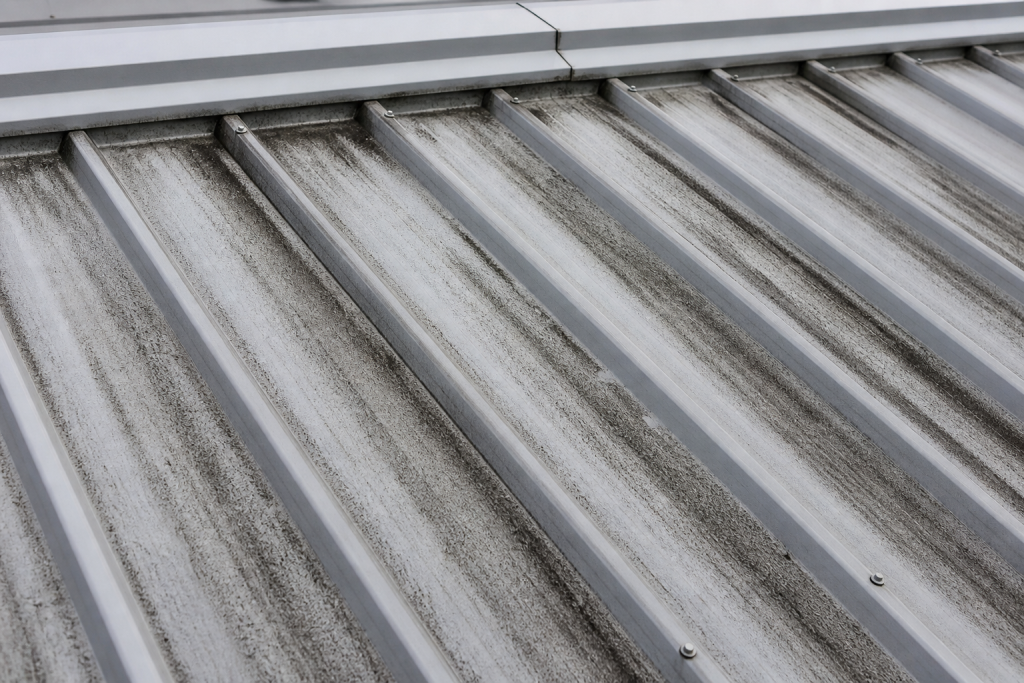
Algae spreads progressively down the tile face with each rainfall and is the most visible indicator of roof contamination across Daisy Hill’s diverse housing stock. Chemical pre-treatment and controlled soft wash removes it at the root level and prevents rapid recurrence.
Valley and gutter blockages from eucalyptus debris
Eucalyptus leaf matter and bark from the conservation park and surrounding residential planting accumulates in roof valleys and gutterlines throughout the suburb — particularly heavy during Brisbane’s windy spring months when the park sheds most prolifically. Valley blockages hold moisture on tile surfaces above and gutter blockages cause overflow damage to fascias and external walls.
Why Daisy Hill Roofs Face the Most Demanding Bushland Conditions in Logan City
Daisy Hill’s conservation park proximity is the defining factor. No other Logan City suburb has a larger proportion of its area dedicated to native bushland — and that natural richness creates roof contamination conditions that are more aggressive and faster-building than in standard suburban locations.
Daisy Hill Conservation Park — 1,170 hectares of native bushland
Daisy Hill Conservation Park protects significant habitat for koalas and other wildlife, with an extensive network of shared trails through open eucalypt forest. That open eucalypt forest generates enormous quantities of leaf litter, bark, pollen, and organic particulate that deposits on residential rooftops throughout the suburb year-round. Properties directly bordering the conservation park — and those within the residential precincts closest to the park boundary — experience some of the heaviest organic debris loads on rooftops of any Logan City suburb.
Daisy Hill Koala Centre and wildlife corridor
The Daisy Hill Koala Centre is a free education facility where koalas can be met up close — a conservation hub embedded within the park’s eucalyptus habitat. The koala population dependent on this habitat means significant eucalyptus canopy maintained throughout the conservation park and its buffer zones — a constant source of fine organic particulate that settles on nearby residential rooftops.
Low residential density with large lot sizes
Daisy Hill has a residential density of just 769 people per square kilometre — one of the lowest in Logan City. Lower density means larger lot sizes, more mature residential planting, and more individual tree canopy per property. Larger lots with extensive native and established planting experience higher organic debris deposits on rooftops than compact suburban properties.
Slacks Creek drainage corridor
Daisy Hill overlooks Slacks Creek to the south — a drainage waterway whose catchment runs through the suburb’s southern precincts. Creek-adjacent drainage areas generate localised humidity that keeps roof surfaces moist longer after rainfall, creating extended biological growth windows on nearby properties.
Pacific Motorway southern boundary
The suburb’s southern boundary is the Pacific Motorway — a major road corridor that generates atmospheric particulate depositing on south-facing roof sections throughout the suburb’s southern residential precincts.
Diverse housing stock across the suburb
Major subdivisions began in Daisy Hill in 1971 — producing a well-established residential community with a diverse mix of housing across the suburb. Concrete tile, terracotta, and Colorbond are all represented throughout Daisy Hill’s residential precincts, all facing the same consistent biological contamination challenge from the suburb’s conservation park environment.
Roof Cleaning Services Available in Daisy Hill
We provide a full range of roof cleaning and exterior maintenance services for Daisy Hill residential properties:
- Roof cleaning Brisbane — full soft wash roof clean for tile, terracotta, and Colorbond roofs
- External house washing — walls, fascias, soffits, and eaves as part of a complete exterior package
- Gutter cleaning — full debris removal, downpipe flushing, and outlet clearing
- Pressure washing — driveways, pathways, and outdoor hardstand surfaces
- Solar panel cleaning — purified deionised water system, manufacturer-safe technique
Why Daisy Hill Homeowners Choose Us
We understand conservation park environments
Daisy Hill’s bushland context creates roof cleaning requirements that are different from standard suburban jobs — heavier organic debris loads, faster biological growth rates, and more substantial valley and gutter accumulation. Our operators know what to expect on Daisy Hill properties and come prepared for the scale of the job.
Soft wash only on tile roofs
High pressure damages tiles, dislodges ridge capping, and blasts mortar from joints — regardless of tile type or age. Our low-pressure soft wash system removes biological growth using chemistry, not force — the correct approach for every roof type across Daisy Hill’s diverse housing stock
Fixed-price quotes
We confirm the price before we start — accounting for Daisy Hill’s conservation park environment and typically heavier biological coverage in our quoting process. No variations on the day.
Thorough bushland condition reporting
Our operators document cracked tiles, failing ridge capping, blocked valleys, and gutter damage before leaving. Given Daisy Hill’s heavy organic debris environment, gutter and valley condition is a particular focus of our post-clean report.
How Roof Cleaning Works in Daisy Hill
Step 1 — Free quote. Contact us with your property details — suburb, roof type, proximity to conservation park boundary, storey height. We provide a fixed-price quote for roof cleaning in Daisy Hill that accounts for your specific bushland exposure.
Step 2 — Booking. We confirm your date and arrival window. You don’t need to be home — gate access is sufficient.
Step 3 — Pre-treatment. Biodegradable moss, algae, and lichen treatment applied to the full roof surface. Extended dwell time for Daisy Hill’s conservation park-adjacent properties — the biological growth here is typically heavier and more established than in standard suburban locations.
Step 4 — Soft wash. Low-pressure cleaning system applied across the full roof — calibrated to your specific tile type. Concrete tile, terracotta, and Colorbond each require different pressure and solution settings.
Step 5 — Valley clear and gutter check. Roof valleys cleared of eucalyptus and conservation park debris — a more substantial clearing task in Daisy Hill than in most Logan City suburbs. Full gutter inspection with blockage and structural condition assessment.
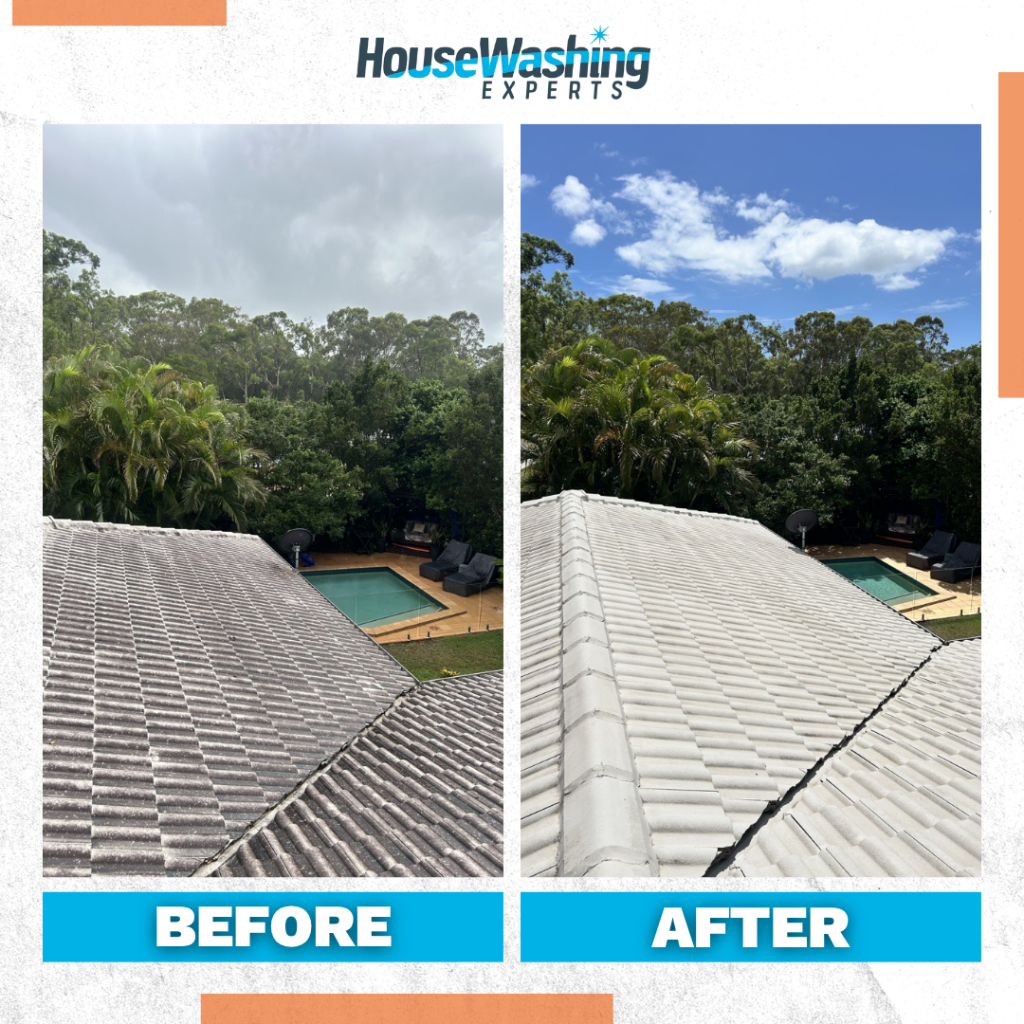
Step 6 — Post-clean inhibitor and sign-off. Mould inhibitor applied to slow biological regrowth — in Daisy Hill’s bushland environment this treatment is particularly important given the continuous organic input from the conservation park. Before and after photos provided on request.
Landmarks and Areas We Cover in Daisy Hill
We service the full Daisy Hill suburb and all immediately surrounding areas. Key landmarks and reference points in our coverage area include:
- Daisy Hill Conservation Park — 1,170 hectares of native bushland reserve throughout and adjacent to the suburb
- Daisy Hill Koala Centre — free koala conservation education facility within the park
- Pacific Motorway (M1) — southern boundary corridor
- Springwood Road — primary access arterial through the suburb
- Shailer Park — adjacent eastern suburb
- Slacks Creek drainage corridor — southern waterway catchment
We also service all adjacent suburbs as part of the same Logan City eastern corridor schedule: Shailer Park, Springwood, Slacks Creek, Underwood, Rochedale South, Loganholme, and Tanah Merah.
Getting to Daisy Hill — How Our Team Reaches You
Daisy Hill is accessible from Brisbane’s south via the Pacific Motorway (M1) to the Springwood or Daisy Hill exits, or via Springwood Road through the suburb from the north. From our Brisbane south base, most Daisy Hill properties are reachable within 25 to 35 minutes — within our standard service radius with no out-of-area charge.
For properties on the northern side near the conservation park boundary, we access via Springwood Road or Priestdale Road. Properties on the southern side near the Pacific Motorway boundary are accessed from the Daisy Hill or Shailer Park motorway exits directly.
ROOF CLEANING | Frequently Asked Questions
Book Your Roof Cleaning in Daisy Hill Today
Daisy Hill is one of Logan City’s most distinctive suburbs — a residential community where family homes genuinely coexist with one of South East Queensland’s most significant urban conservation areas. Living next to 1,170 hectares of native bushland is a privilege. It also means your roof needs more consistent attention than most Brisbane properties. A professional annual clean keeps your tiles in the condition they should be, protects your property from the structural consequences of unchecked biological growth, and keeps your Daisy Hill home looking its best in one of Logan City’s most sought-after eastern addresses.
Get your free fixed-price quote today. We’ll have a crew at your Daisy Hill property within the week.
📞 1300 927 433 — Call or text anytime 📋 Request a free quote online — Response within 24 hours
Servicing Daisy Hill, Shailer Park, Springwood, Slacks Creek, Underwood, Rochedale South, Loganholme, Tanah Merah, and all surrounding Logan City eastern corridor suburbs.
House Washing Experts | Roof Cleaning Daisy Hill | Conservation Park Environment Specialists | Soft Wash | Tile, Terracotta & Colorbond | Logan City | Fully Insured | Satisfaction Guaranteed