Professional roof cleaning in Tarragindi — removing moss, lichen, algae, and organic growth from tile, terracotta, and Colorbond roofs across one of Brisbane’s most leafy and sought-after inner southern suburbs.
"*" indicates required fields

Tarragindi is one of Brisbane’s most consistently desirable inner southern suburbs — a leafy Brisbane suburb known for strong growth, family appeal, and proximity to the CBD. Positioned just 9 kilometres south of the Brisbane CBD, bordered by Toohey Forest Conservation Park to the east and the South-East Freeway to the west, Tarragindi offers a rare combination of genuine bushland proximity and practical inner-city access that makes it one of the most tightly held addresses on Brisbane’s southside. It’s also a suburb where roof contamination builds persistently — because the same natural environment that gives Tarragindi its leafy, green character creates some of the most consistent biological rooftop conditions of any inner southern suburb in Brisbane.
Tarragindi is a southern suburb in the City of Brisbane, located approximately 9 kilometres south of the Brisbane CBD. With a population of 11,035 people across 4.5 square kilometres, Tarragindi has a residential density of 2,452 people per square kilometre. The suburb boundaries are largely defined by the Southeast Freeway and Toohey Forest. The main part of the suburb lies in a valley running north-south, surrounded by ridges — a topography that shapes both the suburb’s character and its rooftop contamination conditions.
Tarragindi was established in 1857 — one of Brisbane’s longest-established southern residential communities. That settlement history has produced a suburb with genuine character, established tree canopy throughout its residential streets, and a housing stock that spans multiple generations of Brisbane’s residential development. All of it faces consistent biological contamination challenges from Toohey Forest’s proximity and the valley topography that keeps the suburb’s rooftops moist and biologically active year-round.
We provide professional roof cleaning in Tarragindi using low-pressure soft wash technique — the right approach for every tile type across this suburb’s well-established and character-rich housing stock. We’re based in Brisbane’s south and service Tarragindi as part of our regular inner southern suburbs schedule — fast response, no out-of-area surcharge.
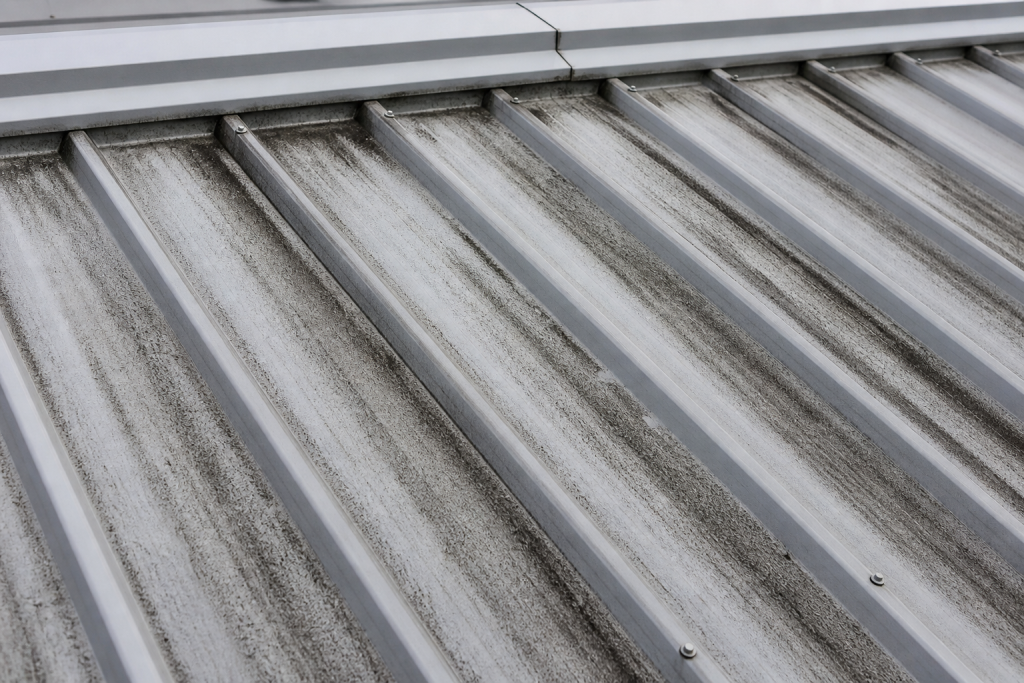
The most consistently reported issue across Tarragindi’s established housing — dark biological staining running from ridge to eave on south and east-facing sections. Valley topography slows drying after rainfall and accelerates algae establishment — chemical pre-treatment and controlled soft wash removes it at the root level.
Properties bordering Toohey Forest or in the valley floor precincts develop persistent moss coverage — the combination of forest humidity, organic debris input, and reduced airflow creates ideal moss establishment conditions. Moss expands through wet-dry cycles, lifts tile edges, and creates water penetration pathways if left untreated.
Lichen bonds structurally to tile surfaces over time and is the most resistant biological growth we encounter across Tarragindi’s residential housing. The suburb’s Toohey Forest proximity and valley topography create conditions where lichen establishes and spreads particularly aggressively — requiring specialist chemical treatment and extended dwell time to dissolve properly.
Eucalyptus leaf matter, bark, and organic debris from Toohey Forest and Tarragindi’s established residential tree canopy accumulates in roof valleys and gutterlines throughout the suburb — a consistent maintenance challenge that compounds quickly through Brisbane’s wet season.
Eucalyptus leaf matter, bark, and organic debris from Toohey Forest and Tarragindi’s established residential tree canopy accumulates in roof valleys and gutterlines throughout the suburb — a consistent maintenance challenge that compounds quickly through Brisbane’s wet season.
Properties near the South-East Freeway accumulate atmospheric particulate on west and north-facing tile sections — contributing to the grime accumulation that darkens tile faces progressively over time.
Tarragindi’s Toohey Forest boundary, valley topography, and dense residential vegetation create specific roof contamination conditions that build persistently in Brisbane’s subtropical climate.
The suburb boundaries are largely defined by the Southeast Freeway and Toohey Forest — 260 hectares of native eucalyptus bushland that forms Tarragindi’s eastern boundary. Native eucalyptus pollen, leaf litter, bark, and organic particulate from Toohey Forest deposits on residential rooftops throughout Tarragindi’s eastern and southern precincts year-round. Properties near the forest boundary experience some of the highest biological growth rates in Brisbane’s inner southern suburbs — a consistent challenge that defines roof maintenance in this part of the city.
The main part of Tarragindi lies in a valley running north-south, surrounded by ridges. Valley positions experience significantly reduced wind exposure compared to surrounding ridge-top suburbs — meaning roof surfaces in Tarragindi dry more slowly after rainfall than in more exposed locations. Slower-drying rooftops provide extended biological establishment windows for moss and algae with each wet season event.
Ekibin Road East and streets skirting the Tarragindi Reservoir form the western boundary — a water catchment feature that generates elevated local humidity in the suburb’s western precincts. Reservoir-adjacent properties experience extended surface moisture retention on roof surfaces after rainfall.
Tarragindi has a residential density of 2,452 people per square kilometre — a densely settled inner suburb with established residential planting throughout. Tarragindi is known for being a leafy suburb — that tree canopy reduces airflow between properties, slows roof surface drying, and creates the shaded, moist conditions that moss and algae need to establish and spreSouth-Eastad.
Tarragindi has a residential density of 2,452 people per square kilometre — a densely settled inner suburb with established residential planting throughout. Tarragindi is known for being a leafy suburb — that tree canopy reduces airflow between properties, slows roof surface drying, and creates the shaded, moist conditions that moss and algae need to establish and spreSouth-Eastad.
The Freeway forms Tarragindi’s western boundary — one of Brisbane’s busiest road corridors. Properties along the western precincts of the suburb accumulate atmospheric particulate from freeway traffic that deposits on north-facing tile sections, compounding the biological contamination from the natural environment.
Over 1,000mm of annual rainfall combined with Tarragindi’s Toohey Forest exposure, valley topography, and reservoir-adjacent humidity makes this one of Brisbane’s more consistently moist inner southern rooftop environments — driving continuous biological activity on tile surfaces through Brisbane’s extended wet season.
We service Tarragindi as part of our regular inner southern Brisbane schedule — the same crew covering Moorooka, Holland Park West, Annerley, Salisbury, and Mount Gravatt. No out-of-area surcharge, no subcontractors, fast response.
High pressure damages tiles, blasts mortar from joints, and dislodges ridge capping — regardless of tile type or age. Our low-pressure soft wash system removes biological growth using chemistry, not force — the correct approach for every tile type found across Tarragindi’s well-established housing stock.
We confirm the price before we start — accounting for Toohey Forest proximity, valley topography, and the suburb’s established tree canopy in our quoting process. No variations on the day.
Cracked tiles, failing ridge capping, blocked valley sections, and gutter damage all documented during the clean and reported before we leave.
Step 1 — Free quote. Contact us with your property details — suburb, roof type, storey height. We provide a fixed-price quote for roof cleaning in Tarragindi with no call-out fee and no hidden charges.
Step 2 — Booking. We confirm your date and arrival window. You don’t need to be home — gate access is sufficient for most Tarragindi properties.
Step 3 — Pre-treatment. Biodegradable moss, algae, and lichen treatment applied to the full roof surface. Dwell time is observed before washing begins — this is what ensures the clean penetrates biological growth rather than just removing the surface layer.
Step 4 — Soft wash. Low-pressure cleaning system applied across the full roof — calibrated to your specific tile type. Concrete tile, terracotta, and Colorbond each require different pressure and solution settings.
Step 5 — Valley clear and gutter check. Roof valleys cleared of Toohey Forest and established canopy debris, gutters inspected for blockage, and any structural concerns flagged before we leave.
Step 6 — Post-clean inhibitor and sign-off. Mould inhibitor applied to slow biological regrowth for up to 18 months. Before and after photos provided on request.
We service the full Tarragindi suburb and all immediately surrounding areas. Key landmarks and reference points in our coverage area include:
We also service all adjacent suburbs as part of the same inner southern schedule: Moorooka, Holland Park West, Holland Park, Annerley, Salisbury, Yeerongpilly, and Mount Gravatt.
Tarragindi is one of the most accessible inner southern suburbs for our Brisbane south-based crew. We travel via the South-East Freeway to the Tarragindi or Holland Park exits, or directly along Ipswich Road and Ekibin Road from the south. From our base, most Tarragindi properties are reachable within 15 to 20 minutes — well within our standard service radius with no out-of-area charge.
For properties on the eastern side near Toohey Forest, we access via Wellers Hill Road or Prior Street. Properties on the western side near the freeway boundary are accessed directly from Ekibin Road or Beaudesert Road corridor streets.
Most standard single-storey homes in Tarragindi are quoted between $380 and $580 for a full roof clean, reflecting the Toohey Forest-adjacent environment and typically higher biological growth rates compared to suburbs further from the forest boundary. Properties nearest Toohey Forest with heavier moss and lichen coverage may be quoted toward the higher end. We provide free fixed-price quotes — contact us for an accurate estimate with no obligation.
Every 12 to 18 months is the recommended interval for most Tarragindi properties. Homes bordering Toohey Forest or in the valley floor precincts with reduced airflow benefit from annual cleaning. Our post-clean mould inhibitor treatment significantly extends the time between cleans.
Yes — measurably. Valley positions experience reduced wind exposure compared to surrounding ridge-top suburbs, which means roof surfaces dry more slowly after rainfall. Slower-drying rooftops provide extended biological establishment windows with each wet season event — Tarragindi’s valley floor properties typically accumulate biological growth faster than comparabl
Yes — and it’s the correct approach for every tile type found across Tarragindi’s housing stock. Whether you have concrete tile, terracotta, or Colorbond, high pressure is never the right approach — it damages tiles, dislodges ridge capping, and blasts mortar from joints. Our low-pressure soft wash system removes biological growth using chemistry, not force — completely safe for all surfaces.
Full gutter cleaning — interior debris removal and downpipe flushing — is available as an add-on and strongly recommended for Tarragindi properties. Toohey Forest eucalyptus debris and the suburb’s established residential tree canopy make gutters one of the fastest-accumulating maintenance items in this suburb.
Yes. We service all adjacent inner southern Brisbane suburbs including Moorooka, Holland Park West, Holland Park, Annerley, Salisbury, Yeerongpilly, and Mount Gravatt — all as part of our regular inner southern schedule with no additional travel charge.
Tarragindi is one of Brisbane’s most consistently sought-after inner southern suburbs — a leafy, family-focused community that combines genuine bushland proximity with practical CBD access in a way that very few inner-city suburbs can match. Protecting your Tarragindi property investment means maintaining what’s above you — and in a suburb bordered by Toohey Forest, defined by its valley topography, and known for its dense residential tree canopy, roof maintenance is one of the most important and consistently pressing property care commitments Tarragindi homeowners face.
Get your free fixed-price quote today. We’ll have a crew at your Tarragindi property within the week.
📞 1300 927 433 — Call or text anytime 📋 Request a free quote online — Response within 24 hours
Servicing Tarragindi, Moorooka, Holland Park West, Holland Park, Annerley, Salisbury, Yeerongpilly, Mount Gravatt, and all surrounding inner southern Brisbane suburbs.
House Washing Experts proudly serves homeowners and property managers across Brisbane’s southern and eastern suburbs. Whether you need house washing, roof cleaning, driveway cleaning, or pressure washing, our team is local, experienced, and ready to deliver spotless results right in your neighbourhood.
Areas We Serve Near Tarragindi:
Get your free, no-obligation quote today and see why Brisbane homeowners trust Roof Cleaners Brisbane to keep their roofs looking their best and protected all year round.