Why Is My Roof Covered in Moss, Algae & Grime? (Cleaning Roof Tiles of Moss & Algae)
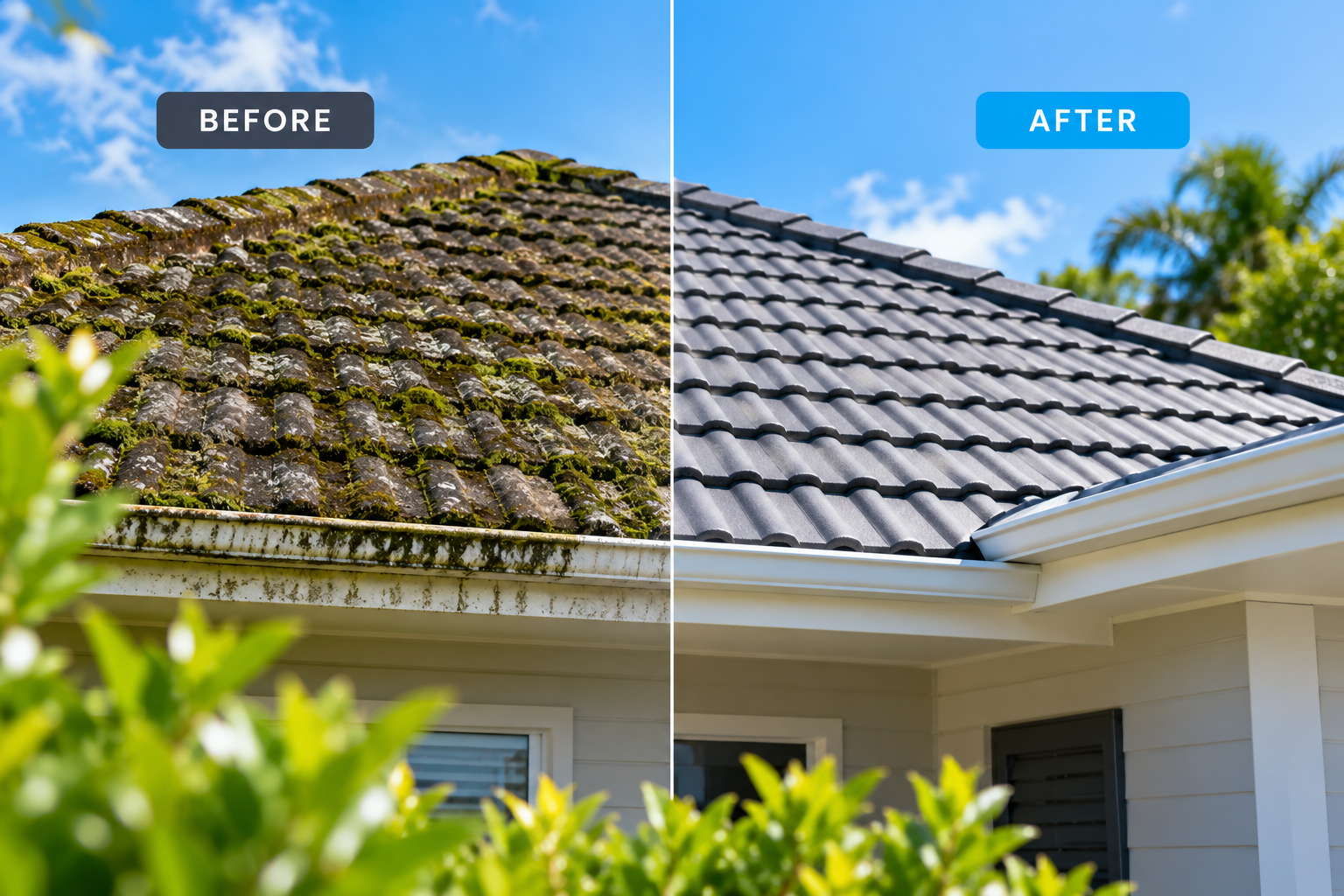
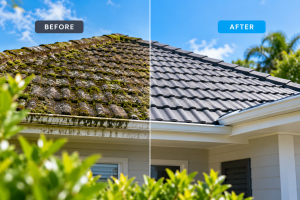
If your roof has gone from a clean grey, terracotta, or Colorbond finish to patchy green-black streaks, you’re not imagining it — and you’re not alone. It’s one of the most common calls we get at House Washing Experts, and almost every time, homeowners ask the same two questions: what actually is this, and should I be worried about it?
In this guide, we’ll break down exactly what’s growing on your roof, why Brisbane homes are especially prone to it, and how to tell whether you’re dealing with a cosmetic issue or something that needs attention sooner rather than later.
What’s Actually Growing on Your Roof?
Most homeowners lump everything into “moss” or “that green stuff,” but there are actually three distinct organisms that show up on Brisbane roofs — and each behaves a little differently.
| Growth | What it looks like | Where it thrives | Removal difficulty |
|---|---|---|---|
| Moss | Soft, fuzzy, bright green clumps | Shaded, damp areas — under trees, south-facing sections | Moderate |
| Algae | Fine green or black streaking, often dulls the whole surface | Humid, warm areas — spreads fast in Brisbane’s climate | Moderate |
| Lichen | Flat, crusty grey-green patches that grip the surface | Long-neglected roofs, older tile roofs | High |
Moss retains moisture and tends to build up in shaded, damp corners of the roof — think areas under overhanging trees or sections that rarely get direct sun.
Algae is what causes that dull, streaky discolouration across large sections of a roof. It thrives in warm, humid conditions, which is exactly what Brisbane offers for most of the year.
Lichen is the toughest of the three because it isn’t one organism — it’s algae and fungi growing together in a single structure. That combination lets it attach far more firmly to roofing material than moss or algae alone, which is why it’s usually the hardest to remove without the right method.
Why Brisbane Roofs Are Especially Prone to This
This isn’t just “roofs get dirty over time” — there’s a specific reason Brisbane homes deal with this more than homes in drier climates.
Brisbane’s combination of heat and humidity creates near-ideal growing conditions for algae and moss for much of the year. Add tree cover or a shaded roofline into the mix, and organic growth can establish itself noticeably faster than on an open, sun-exposed roof.
Homes closer to Brisbane’s coastal suburbs face an additional factor: salt in the air combines with humidity to accelerate both staining and organic growth, which is why coastal properties often need cleaning a little more frequently than homes further inland.
None of this means your roof is poorly maintained — it’s simply the climate doing what Brisbane’s climate does. But it does mean regular cleaning matters more here than it would in a drier city.
Is It Just Ugly, or Is It Actually Damaging Your Roof?
This is the question that actually matters, and the honest answer is: it depends on the stage.
Cosmetic stage — dulled colour, light green streaking, a generally “tired” looking roof. At this point, it’s mostly an appearance issue affecting your home’s kerb appeal.
Structural risk stage — thicker moss growth, dark green-black patches, or visible lichen colonies. At this stage, the organic growth is retaining moisture directly against the roof surface. On tile roofs, that trapped moisture can gradually weaken mortar and pointing. On metal roofing, prolonged moisture contact can contribute to coating breakdown over time. Left unaddressed long enough, this kind of buildup can contribute to leaks and premature wear — a pattern well documented in general roofing research, which notes that algae buildup is rarely just a cosmetic issue once it’s established for an extended period (This Old House).
Quick visual guide:
| What you see | Likely stage | What it means |
|---|---|---|
| Light green dusting or streaking | Early cosmetic | Worth monitoring, not urgent |
| Thick green-black patches | Established growth | Cleaning recommended soon |
| Grey-green crusty patches (lichen) | Advanced | Professional removal recommended |
If your roof is tiled, this is also worth reading alongside our guide on terracotta roof care, since tile roofs are more sensitive to how this kind of buildup is removed.
How to Tell What You’re Looking At (Without Climbing Up There)
You don’t need to get on the roof to get a reasonable read on what’s growing — and honestly, you shouldn’t. A few things you can check safely from ground level or a second-storey window:
Colour and texture from a distance. Moss reads as soft, bright green clumps you can usually spot even from the street. Algae shows up as a duller, more uniform streaking — it dulls the whole section of roof rather than forming distinct clumps. Lichen tends to look flatter and greyer, almost like the roof has a rash of pale patches rather than growth sitting on top of it.
Where it’s concentrated. If the growth is mostly on one side of the roof, that’s a strong clue. South-facing and heavily shaded sections — particularly under large trees — will almost always show growth first and worst. If your neighbours with similar-aged, similarly-oriented roofs aren’t showing the same buildup, tree cover or drainage is usually the difference.
How long it’s been there. This is the one homeowners underestimate. Moss and algae can establish in a single wet season. Lichen takes considerably longer to colonise a roof — so if you’re seeing lichen-style patches, it’s a sign the roof likely hasn’t been cleaned in several years, not just since last summer.
A simple test: if you can see the growth clearly from the ground without needing to squint, it’s usually past the “light dusting” stage and into the range where a professional clean is worth booking rather than watching.
Can Regular Maintenance Prevent This Altogether?
Not entirely — Brisbane’s climate means some level of organic growth is close to unavoidable over time, even on a well-maintained home. But the frequency and severity of it is very manageable with the right habits:
- Trim overhanging branches where practical. Less shade and leaf litter on the roof means less trapped moisture, which slows growth significantly.
- Keep gutters and valleys clear. Blocked gutters hold water against the roofline longer than it should sit, which speeds up moss and algae establishment right at the edges.
- Don’t wait for the “bad” stage. A roof that’s cleaned every 1–2 years generally only ever needs a straightforward soft wash. A roof that’s left for 5+ years is far more likely to have lichen colonisation, which takes longer and costs more to remove properly.
- Know your roof’s microclimate. If your home backs onto bushland, sits under a heavy tree canopy, or is within a few kilometres of the coast, treat the “1–2 year” guideline as an upper limit, not a target.
None of this replaces a professional clean once growth is established — but it does mean fewer surprises and a cheaper, faster job when you do book one.
FAQs
Left untreated, moss and algae retain moisture against the roof surface, which can gradually weaken mortar and pointing — especially on tile roofs. It starts as a cosmetic issue but doesn’t necessarily stay that way.
You can, but it carries real risk. Incorrect pressure or the wrong tools can crack tiles or strip protective coatings — something we cover in detail in our guide on DIY roof cleaning risks.
Most Brisbane homes benefit from a professional clean every 1–2 years. Homes near large trees, in heavily shaded areas, or closer to the coast may need it a little sooner.
Yes. Lichen combines algae and fungi, which allows it to attach more firmly to roofing material — making it the hardest of the three to remove without the right method.
It can, particularly if trees overhang both the roof and panels. Debris and organic growth around panel edges can reduce efficiency over time. If you have solar, it’s worth having panels checked alongside the roof.
No — a proper soft-wash treatment removes the organism at the root, not just the visible surface growth, which is why it holds up considerably longer than a simple rinse or scrub.
The Bottom Line
Moss, algae, and lichen on a Brisbane roof aren’t a sign of poor maintenance — they’re a predictable result of the local climate. What matters is catching it while it’s still cosmetic, before it becomes a moisture problem that affects the roof itself.
If your roof is showing early signs of moss, algae, or lichen, House Washing Experts can assess it and recommend the safest cleaning approach for your specific roof type. Get a free roof inspection →
Fully insured & 5-star rated · Servicing all Brisbane suburbs