
★★★★★ Rated 4.8 out of 5 Based on 525+ Google reviews
Google
"*" indicates required fields
★★★★★ Rated 4.8 out of 5 Based on 525+ Google reviews
Most Chapel Hill homes are quoted $$150–$ $349
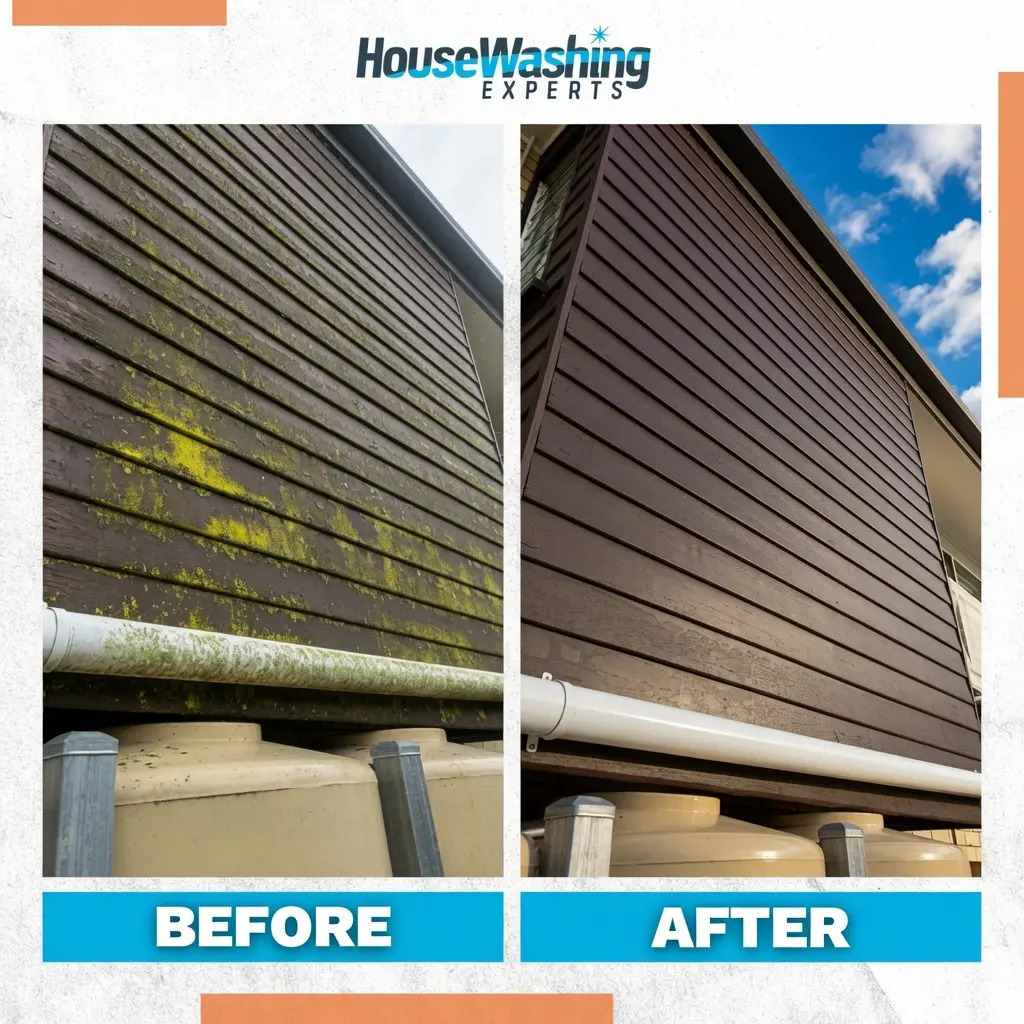
Chapel Hill sits approximately 9 kilometres west of Brisbane’s CBD, occupying elevated ridge and slope terrain between Kenmore to the west, The Gap to the north, Indooroopilly to the south-east, and Fig Tree Pocket to the south. It’s a suburb that developed predominantly through the 1970s and 1980s, with a housing stock that reflects that era — brick veneer family homes on generous blocks, rendered facades, and a smaller number of older timber homes in the established pockets closest to the suburb’s original development footprint. The generous block sizes and established garden plantings that came with Chapel Hill’s era of development have matured into one of Brisbane’s most impressive western residential canopies — dense, leafy, and extraordinarily effective at keeping exterior surfaces shaded and slow-drying in Brisbane’s subtropical climate.
Chapel Hill’s western position places it adjacent to two significant natural features that directly shape its exterior surface maintenance environment. Cubberla Creek runs through the suburb’s southern and western sections, generating localised humidity in the adjacent residential streets that elevates moisture levels on exterior surfaces above what standard suburban positions experience. And Pear Street Reserve, Cubberla-Witton Catchment Area, and the broader D’Aguilar Range bushland on Chapel Hill’s northern boundary contribute continuous native vegetation organic load — pollen, bark, seed debris, and leaf matter — to the roofing, gutters, and exterior wall surfaces of properties in proximity to these corridors.
At House Washing Experts, we service the inner-west Brisbane corridor regularly — Kenmore, The Gap, Indooroopilly, Taringa, Toowong, Bardon, Ashgrove. Chapel Hill is familiar ground. We know the 1970s and 1980s brick veneer housing stock, the Cubberla Creek moisture conditions, and the specific biological growth environment that western Brisbane’s canopy density and subtropical climate produce.
Chapel Hill sits within our inner-west Brisbane service corridor — a zone we cover as part of our regular weekly schedule. No travel loading on your quote, fast booking availability, and a crew that arrives understanding what inner-west brick veneer homes under heavy canopy typically present in terms of surface conditions and biological growth profile.
We quote every Chapel Hill property individually based on house size, surface type, contamination level, storey height, and access. Brick veneer and rendered facades, concrete and terracotta tile roofing, concrete driveways, timber decks, and timber and Colorbond fencing — all factored into your written fixed-price quote before we start. No flat-rate pricing that ignores the actual scope of your property. No surprises on the day.
Written fixed-price quote before we begin. Satisfaction guarantee when we finish. The right method for every surface on your property — every time.
Mould and algae on brick veneer exterior walls is the defining surface maintenance problem across Chapel Hill’s 1970s and 1980s housing stock. The combination of Cubberla Creek corridor humidity, dense established canopy creating persistent shade on south and west-facing elevations, and the weathered mortar joints of homes now 40 to 50 years old creates ideal conditions for biological growth to colonise mortar joints and spread across brick faces in the suburb’s most shaded positions. Our soft wash treatment with biodegradable biocide solution penetrates mortar joints and kills biological growth at the root — not just at the visible surface, which is all pressure washing alone achieves on these porous older surfaces.
Chapel Hill’s residential roofing — predominantly concrete and terracotta tile across the suburb’s 1970s and 1980s housing stock — develops lichen and algae streaking that darkens progressively through each wet season. The suburb’s dense canopy shading on south-facing roof pitches and the native vegetation organic load from the D’Aguilar Range and Cubberla-Witton bushland corridors accelerate moss and lichen establishment on tile surfaces adjacent to these natural areas. On roofing now approaching 40 to 50 years old, lichen physically degrades tile glaze and mortar pointing over time. Our roof cleaning service removes all organic growth safely using the correct soft wash approach — without cracking, loosening, or dislodging tiles or damaging aged mortar pointing.
Chapel Hill’s mature residential canopy — one of Brisbane’s densest in the western corridor — deposits leaf matter, bark debris, and organic material onto driveways, paths, and paved areas continuously through the year. Tannin released from decomposing leaves bonds into concrete surfaces over Brisbane’s wet seasons, building into persistent brown-orange staining that standard pressure washing alone cannot fully lift. On Chapel Hill’s longer driveway runs — common on generous 1970s and 1980s blocks — this tannin staining accumulates across a significant surface area. Our tannin pre-treatment solution applied before pressure washing lifts this staining cleanly and restores a consistent surface.
Chapel Hill’s generous blocks frequently feature timber decks and outdoor entertaining areas that sit under established canopy — creating the shaded, slow-drying conditions where algae and moss establish fastest on timber surfaces. Green algae slicks on deck boards are both a visual and safety issue, making surfaces slippery and presenting a tired appearance that undermines the rest of the property’s presentation. We clean timber decks using low-pressure treatment that removes biological growth and organic staining without raising the grain or damaging the surface.
Boundary fencing across Chapel Hill develops green algae staining on both faces wherever established garden plantings or neighbouring structures create persistent shade after rain. Chapel Hill’s generous block sizes mean longer fence runs than standard inner Brisbane lots — more surface area to accumulate algae and more shaded sections under canopy where biological growth establishes fastest. On timber fencing, algae penetrates the paint or stain layer if left untreated. We clean both faces of fencing where access allows as part of a full exterior package or as a standalone service.
Chapel Hill properties — particularly those adjacent to Cubberla Creek, Pear Street Reserve, or the D’Aguilar Range bushland boundary — receive a higher-than-average gutter organic load from native eucalypt bark, seed capsules, and leaf debris deposited year-round. Blocked gutters overflow during Brisbane’s wet season, directing water against fascias and exterior walls and accelerating biological growth on lower wall sections. Our gutter cleaning service includes full interior debris removal, downpipe flushing, and outlet clearing — essential before each wet season for any Chapel Hill property adjacent to the bushland or creek corridors.
Chapel Hill’s established tree canopy is among the most impressive in Brisbane’s inner west — the product of 40 to 50 years of garden plantings on generous blocks maturing into a dense residential canopy that shades exterior surfaces, slows surface drying after rainfall, and continuously deposits organic matter onto roofing, gutters, and wall surfaces. Properties with significant canopy overhead accumulate biological growth on south and west-facing surfaces at a rate substantially faster than equivalent properties in open, sunlit positions — and in Chapel Hill, the proportion of properties with significant canopy overhead is exceptionally high by Brisbane standards.
Cubberla Creek threads through Chapel Hill’s southern and western sections before flowing into the Brisbane River via Fig Tree Pocket. The creek generates localised humidity conditions in the adjacent residential streets that keep exterior surfaces damp for longer after rainfall events and morning dew than equivalent properties on more open, inland ground. Properties backing onto or adjacent to the Cubberla Creek reserve system consistently experience faster biological growth cycles on lower cladding, fence lines, and hard surfaces than properties on higher, more open ground away from the creek corridor. The Cubberla-Witton Catchment Area — one of Brisbane’s most significant urban creek systems — amplifies this moisture effect across a significant portion of the suburb.
Chapel Hill’s northern boundary interfaces with the broader D’Aguilar Range bushland system — one of South East Queensland’s most significant peri-urban native vegetation reserves. The reserve’s eucalypt and native understorey vegetation generates continuous pollen, bark debris, seed material, and leaf matter that settles onto roofing, gutters, eaves, and upper wall surfaces of Chapel Hill’s northernmost residential properties. Properties on streets adjacent to the bushland boundary receive a measurably higher organic load on exterior surfaces than equivalent properties further from the reserve — accelerating biological growth cycles and increasing gutter debris accumulation above standard suburban rates.
Chapel Hill’s housing stock — built predominantly through the 1970s and 1980s — is now 40 to 50 years old and firmly in the weathering phase at which brick mortar joints become significantly more porous and hospitable to biological growth penetration. Mortar that was tight and impermeable when new has absorbed four to five decades of Queensland subtropical moisture and heat cycling, developing surface porosity that allows mould and algae to penetrate below the visible surface layer with each successive wet season. In combination with Chapel Hill’s canopy shading and Cubberla Creek humidity, this mortar porosity produces some of the most persistent biological growth conditions in Brisbane’s inner-west corridor.
Brisbane’s wet season delivers sustained high humidity and regular heavy rainfall from November through March. In Chapel Hill — where Cubberla Creek corridor moisture, D’Aguilar Range bushland organic load, and dense established canopy already elevate the biological growth environment above standard suburban conditions — the wet season compounds every environmental factor simultaneously. Creek levels rise and extend humidity into adjacent streets. Native vegetation produces its highest seasonal organic debris volumes. And Brisbane’s subtropical warmth through the wet months creates the temperature and moisture conditions where Chapel Hill’s shaded exterior surfaces accumulate biological growth more aggressively than in almost any other inner Brisbane suburb.
House Washing Experts offers Chapel Hill homeowners a complete exterior cleaning service range suited to the suburb’s 1970s and 1980s brick veneer housing stock, generous block configurations, and bushland-adjacent environmental conditions. Our core service is a full home exterior wash covering all wall surfaces, eaves, fascias, gutters, downpipes, and window exteriors. We also offer roof soft washing for concrete and terracotta tile roofing, driveway and concrete path pressure washing with tannin pre-treatment where required, timber deck and outdoor entertaining area cleaning, timber and Colorbond fence cleaning, internal gutter cleaning with full downpipe flushing and outlet clearing, and full pre-sale preparation packages for homeowners and agents. All services use surface-appropriate methods throughout — soft wash for brick, render, and aged tile surfaces; targeted pressure washing for concrete driveways and hard paving; low-pressure treatment for timber decks. We supply our own water to every job and bring equipment suited to Chapel Hill’s block configurations and access requirements.
We’re Local We work the inner-west Brisbane corridor regularly, and Chapel Hill is a suburb we know well. Brick veneer homes from the 1970s and 1980s, generous blocks with mature dense canopy, concrete and terracotta tile roofing approaching 40 to 50 years old, and the specific moisture conditions from Cubberla Creek and the D’Aguilar Range bushland boundary — we’ve worked on these conditions extensively across the inner-west corridor. You’re getting direct experience, not guesswork.
We’re Available When You Need Us We offer flexible booking windows including early morning starts and Saturday availability. Whether you’re managing a pre-sale preparation timeline, a rental inspection schedule, or simply want to address the biological build-up that accumulates under Chapel Hill’s canopy between wet seasons, tell us your deadline and we’ll build the booking around it.
We Use the Right Method for Every Surface Soft wash for brick veneer, mortar joints, render, and aged tile roofing. Tannin pre-treatment and pressure washing for concrete driveways and paths. Low-pressure treatment for timber decks and outdoor entertaining surfaces. On Chapel Hill’s 40 to 50-year-old weathered mortar and aged tile roofing, correct method selection protects surfaces that would be expensive to repair if damaged by high-pressure washing applied without appropriate assessment.
No Surprise Pricing Every Chapel Hill job is quoted individually in writing. Roof inclusions, driveway area, fence run length, deck scope, gutter cleaning — all factored in before we start. What you’re quoted is what you pay. No on-day additions, no scope creep.
We Guarantee Our Work Not satisfied with any part of the clean? We come back and fix it. No argument, no charge. That guarantee applies to every Chapel Hill job we take on.
Step 1 — Free Quote Contact us by phone, online form, or email. We’ll discuss your property in detail — size, surface types, roof inclusion, driveway and deck scope, fence run length, access, proximity to Cubberla Creek or the bushland boundary, and level of biological build-up — and provide a written fixed-price quote within 24 hours. Most Chapel Hill homes are quoted same-day.
Step 2 — Booking Accept the quote and we lock in a date that suits your schedule. Written confirmation and a day-before reminder. We keep to our schedule and communicate proactively if anything changes.
Step 3 — Surface Assessment on Arrival We walk the full exterior on arrival — roofline, walls, driveway, deck, fencing, gutters — to confirm scope, assess surface conditions, and identify any access or surface-specific requirements before treatment starts. For Chapel Hill properties adjacent to Cubberla Creek or the D’Aguilar Range bushland boundary, we assess the contamination profile specific to the position before adjusting treatment approach. Any changes from the quote are discussed before work begins.
Step 4 — Soft Wash Application We apply our low-pressure soft wash solution to all wall surfaces, eaves, fascias, and biological growth areas. On Chapel Hill’s weathered 40 to 50-year-old brick veneer and mortar under heavy canopy shading, we observe appropriate dwell time to ensure biological growth is killed at the root level in the mortar substrate — not merely dislodged at the visible surface for faster regrowth.
Step 5 — Roof, Driveway, Deck, and Site Completion Roof cleaning, driveway and path pressure washing, deck cleaning, fence cleaning, and gutter cleaning are completed where included in the booking scope. We then conduct a thorough walkthrough of the full exterior to confirm every surface meets our standard before packing down.
Step 6 — Final Sign-Off We walk through the completed job with you or send a detailed photo report if you’re not home. Every surface documented. The job isn’t finished until you’re satisfied with the result across every surface we’ve treated.
We service all residential streets across Chapel Hill including properties along Chapel Hill Road, Moggill Road, Kenmore Road, Rafting Ground Road, and the residential grid running between the Cubberla Creek corridor to the south and west and the D’Aguilar Range bushland boundary to the north. We regularly clean homes near Chapel Hill State School and Kenmore State High School, properties adjacent to the Cubberla-Witton Catchment Area reserve system, and the established residential streetscapes running toward Kenmore to the west and Indooroopilly to the south-east. We’re familiar with Chapel Hill’s block configurations — including properties on steeper ridge sections, homes with elevated access requirements, and larger blocks with extended driveway runs and fence lines common in the suburb’s established pockets.
Chapel Hill sits approximately 9 kilometres west of Brisbane’s CBD, bordered by The Gap to the north, Kenmore to the west, Fig Tree Pocket to the south, and Indooroopilly and Taringa to the south-east. Moggill Road and Chapel Hill Road form the primary arterial connectors through and around the suburb, with Kenmore Road and Rafting Ground Road providing the main internal routes. Our crews service Chapel Hill as part of our regular inner-west Brisbane run — no travel surcharge, fast booking availability, and a team that knows the suburb’s 1970s and 1980s housing stock, block configurations, and access requirements. Call us to confirm availability for your specific address.
Most Chapel Hill homes are quoted between $150 and $349 for a full exterior wash. Properties with roof inclusions, extended driveway areas, deck scope, or significant fence run length may be quoted toward the higher end of this range depending on total scope. Every Chapel Hill property is quoted individually in writing before any work begins — you know exactly what you’re paying before we start.
Yes — it’s specifically the correct method for these surfaces. The brick mortar on Chapel Hill’s 40 to 50-year-old homes has become significantly more porous than when new, and high-pressure washing on aged mortar causes progressive joint damage that makes the porosity problem worse over time and accelerates biological regrowth. Our low-pressure soft wash treatment penetrates weathered mortar to kill biological growth at the root without mechanical damage to the joint or brick face — producing a result that lasts significantly longer than pressure washing alone.
Yes — measurably. Properties adjacent to or in proximity to Cubberla Creek and the Cubberla-Witton Catchment Area reserve system experience elevated localised humidity that keeps exterior surfaces damp for longer after rainfall and morning dew. This produces faster biological growth cycles on lower cladding, fence lines, and hard surfaces than equivalent properties on more open, inland ground further from the creek. We factor creek-adjacent position into our contamination assessment and treatment approach for every Chapel Hill job where this applies.
Yes. Tile roof cleaning is one of our most common service requests across the inner-west corridor given the age of Chapel Hill’s housing stock. We use soft wash exclusively on concrete and terracotta tile roofing approaching 40 to 50 years old — high-pressure washing strips protective coatings, damages mortar pointing, and can crack aged tiles that are difficult to source for homes of this era. Soft washing removes moss, lichen, and biological growth safely and extends the useful life of your roof tiles significantly.
We recommend most Chapel Hill properties be cleaned every 12 to 18 months. Homes adjacent to Cubberla Creek, under significant canopy shading, on south-facing slope sections, or with properties adjacent to the D’Aguilar Range bushland boundary benefit from the shorter end of that cycle. The combination of canopy shading, creek corridor moisture, and bushland organic load in Chapel Hill produces some of the most consistent biological growth conditions in Brisbane’s inner west — staying on a regular maintenance cycle prevents the deep subsurface penetration in aged mortar that compounds the longer it’s left.
Yes. Our service area covers all surrounding inner-west suburbs including Kenmore, The Gap, Indooroopilly, Taringa, Fig Tree Pocket, Moggill, Pullenvale, and Brookfield. If you have a neighbouring property or investment that also needs attention, we’re happy to quote both in the same visit.
Chapel Hill’s leafy western character, generous blocks, and inner-west proximity make it one of Brisbane’s most consistently desirable residential addresses — and a professional exterior clean is the most effective way to maintain the presentation of a home that sits under one of the city’s densest residential canopies in a creek-adjacent subtropical environment. Whether you’re a long-term resident managing annual maintenance, an investor protecting a well-located western Brisbane asset, or a homeowner preparing to take a property to market, House Washing Experts delivers results that are immediately visible and that properly treat your surfaces rather than simply washing them.
Request your free quote online or call us directly. Written price within 24 hours, booking typically within the week. No obligation, no guesswork — just a cleaner home and surfaces that are properly treated for Chapel Hill’s specific environmental conditions.
We’ll beat any genuine written quote by 10%
Get your free, no-obligation quote today and see why Brisbane homeowners trust House Washing Experts to keep their homes looking their best and protected all year round.