
★★★★★ Rated 4.8 out of 5 Based on 525+ Google reviews
Google
"*" indicates required fields
★★★★★ Rated 4.8 out of 5 Based on 525+ Google reviews
Most Tarragindi homes are quoted $$150–$ $349
Tarragindi sits approximately 7 kilometres south of Brisbane’s CBD, occupying a gently elevated inner-south position between Holland Park to the east, Moorooka to the west, Salisbury and Nathan to the south, and Annerley and Greenslopes to the north. It’s a suburb with a genuinely mixed housing stock reflecting its long inner-south development history — Queenslanders on generous corner blocks, post-war brick and timber homes on the established residential grid, and a growing number of renovated and repositioned character properties that reflect increasing buyer interest in Tarragindi’s combination of genuine character housing, generous block sizes, and proximity to Toohey Forest Park’s extensive native bushland reserve. Tarragindi has been one of Brisbane’s more active inner-south renovation suburbs in recent years — its Queenslander and post-war housing stock attracting buyers who see the value in restoring and modernising these properties for the inner-south market.
Tarragindi’s inner-south position places it in Brisbane’s subtropical biological growth corridor where mould and algae accumulate consistently on painted timber, brick, render, and tile surfaces throughout the year. The suburb’s character housing stock — Queenslanders with painted timber cladding and post-war brick homes with aged mortar joints — presents porous heritage surfaces that absorb biological contamination most deeply. Toohey Forest Park’s southern boundary generates significant native vegetation organic load on properties adjacent to the reserve. And the established canopy on generous Tarragindi blocks creates persistent shade on south-facing elevations and continuous organic debris on driveways and roofing throughout the year.
At House Washing Experts, we service the inner-south Brisbane corridor regularly — Holland Park, Moorooka, Salisbury, Nathan, Annerley, Greenslopes, Macgregor. Tarragindi is familiar ground. We know the Queenslander and post-war character housing stock, the Toohey Forest Park organic load, and the specific biological growth environment that inner-south Brisbane’s established canopy and subtropical climate produce on these heritage surfaces year-round.
Tarragindi sits within our inner-south Brisbane service corridor — a zone we cover as part of our regular weekly schedule. No travel loading on your quote, fast booking availability, and a crew that arrives understanding what inner-south Queenslander and post-war character homes adjacent to a major bushland reserve typically present in terms of organic load, surface sensitivities, and access configurations on older established blocks.
We quote every Tarragindi property individually. Painted Queenslander timber, post-war brick veneer and render, heritage terracotta tile roofing, concrete driveways, and timber and Colorbond fencing — all factored into your written fixed-price quote with appropriate method selection for each surface type. For properties adjacent to the Toohey Forest Park boundary, we assess the contamination profile specific to these reserve-proximate positions before adjusting treatment approach. No flat-rate pricing that ignores the actual condition and scope of your property. No surprises on the day.
Written fixed-price quote before we begin. Satisfaction guarantee when we finish. The right method for every surface on your property — every time.
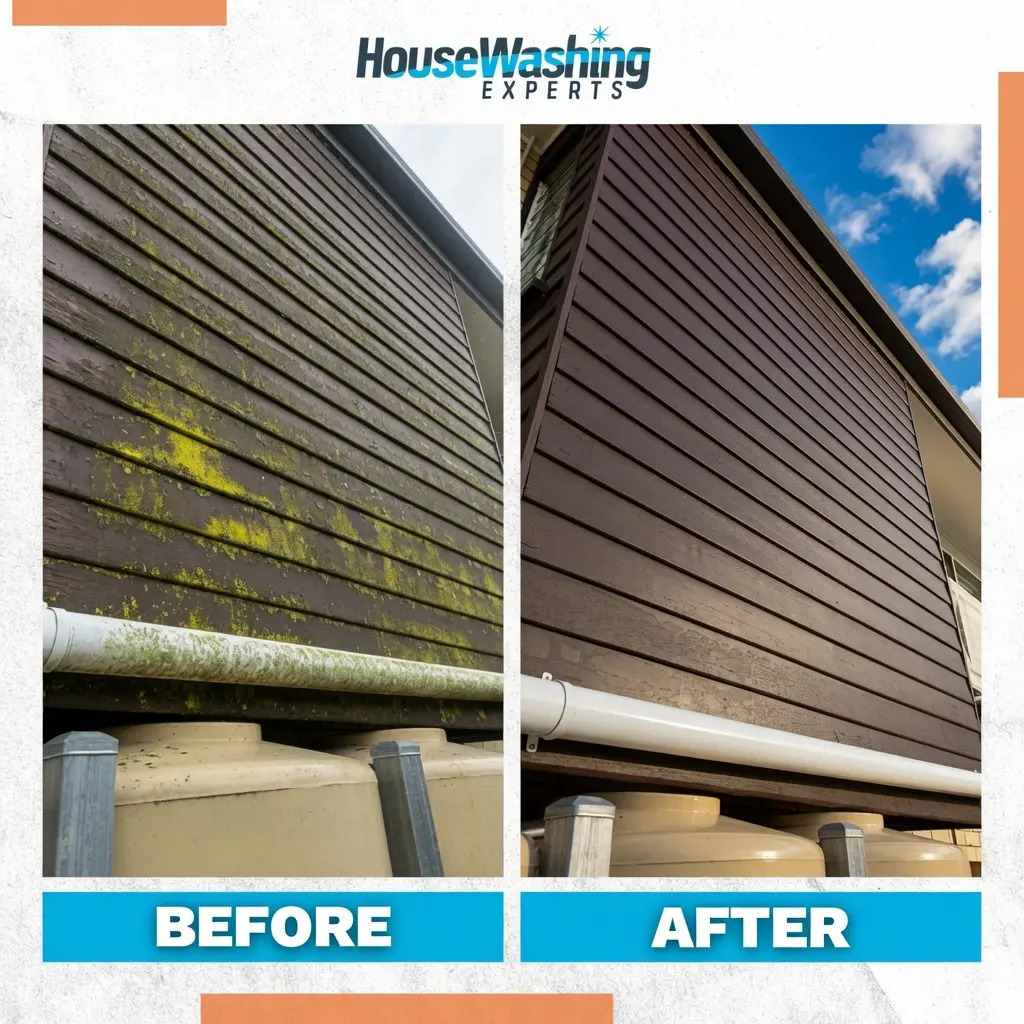
Tarragindi’s inner-south position, Toohey Forest Park proximity, and established canopy create conditions where painted timber cladding on Queenslanders and post-war character homes accumulates mould and algae faster than most homeowners expect. Weatherboard joints, the underside of eave overhangs, verandah ceilings, and south-facing cladding panels are the primary accumulation zones — areas where biological growth establishes in the paint layer and penetrates into the timber beneath if left untreated. Properties adjacent to Toohey Forest Park present heavier biological load on reserve-facing elevations than standard estate positions. Our soft wash treatment removes mould and algae thoroughly without stripping paint, forcing moisture into joints, or damaging the timber surface.
Post-war brick homes and rendered facades across Tarragindi’s established residential grid develop mould and algae on mortar joints and render texture — penetrating below the visible surface layer into the mortar substrate where standard pressure washing cannot address it. On south and west-facing elevations where established canopy shading and Toohey Forest Park organic load extend drying time after rainfall, biological growth can cover entire wall sections within a single wet season. Our soft wash treatment penetrates mortar joints and render texture to kill biological growth at the root.
Tarragindi’s older homes carry terracotta and concrete tile roofing that accumulates moss and lichen growth — particularly on south-facing pitches and sections shaded by the suburb’s established canopy and closest to the Toohey Forest Park boundary. This growth retains moisture against tile and mortar surfaces, accelerating deterioration and increasing the risk of water ingress through compromised pointing on roofs now approaching 50 to 70 years old in the suburb’s established sections. Soft washing is the only appropriate method for heritage tile roofing of this age — our treatment removes all biological growth safely and extends roof life without the pressure damage that destroys aged tile surfaces and dislodges mortar pointing.
Tarragindi properties adjacent to Toohey Forest Park deal with a significantly higher tannin and organic staining load on driveways and paths than standard suburban properties further from the reserve. Native eucalypt leaf matter, bark strips, and seed capsules from the park’s vegetation combine with the suburb’s established Poinciana, Jacaranda, and Fig canopy to deposit organic material onto concrete surfaces continuously — building into persistent brown-orange staining that standard pressure washing alone cannot fully lift on the most reserve-adjacent properties. Our tannin pre-treatment solution applied before pressure washing addresses this staining at its source.
Properties on Tarragindi’s southern residential streets in proximity to Toohey Forest Park receive native vegetation organic load from the park’s extensive eucalypt and understorey vegetation — pollen, bark debris, and seed material carried by prevailing winds onto south-facing wall surfaces, roofing, and gutters. This native organic load compounds the standard subtropical biological growth from established canopy — creating a higher contamination load on the suburb’s most park-proximate properties than equivalent properties in Tarragindi’s more sheltered northern sections.
Boundary fencing across Tarragindi develops green algae staining on both faces wherever established garden plantings, Toohey Forest Park vegetation, or neighbouring structures create persistent shade after rain. Properties on the park boundary deal with fence lines facing directly onto native bushland — among the more aggressive biological growth positions for fence surfaces in the suburb. We clean both faces of fencing where access allows and treat the surface to slow regrowth after cleaning.
Toohey Forest Park — one of Brisbane’s most ecologically significant urban native bushland reserves — borders Tarragindi’s southern sections. The park’s native eucalypt and understorey vegetation generates continuous pollen, bark debris, seed material, and leaf matter that settles onto roofing, gutters, eaves, and wall surfaces of properties adjacent to the reserve boundary year-round. Properties in Tarragindi’s southern sections adjacent to the park consistently present heavier tannin staining on driveways, faster gutter debris accumulation, and more aggressive biological growth cycles on south-facing elevations bordering the park than equivalent properties further from the reserve — a condition Tarragindi shares with Macgregor and Holland Park, Toohey Forest Park’s other boundary suburbs.
Tarragindi’s Queenslanders, post-war brick homes, and character residences present exterior surface materials that are more porous than modern construction. Painted timber weatherboard with layered paint systems built up over 50 to 70 years, post-war brick mortar that has absorbed five to seven decades of subtropical moisture cycling, and original terracotta tile all absorb airborne biological matter and moisture more deeply than contemporary smooth-finish materials. This deep porosity means biological contamination accumulates below the visible surface layer with each wet season — requiring soft wash chemistry that penetrates the surface to address contamination at the root.
Tarragindi’s generous Queenslander and post-war blocks support established garden plantings — Poinciana, Jacaranda, Fig, and other species — that create persistent shaded zones on south-facing wall elevations and driveway sections, significantly extending surface drying time after rainfall and morning dew. These trees also deposit the tannin-heavy organic debris that compounds the native vegetation load from Toohey Forest Park on the suburb’s most affected properties.
Tarragindi has been one of Brisbane’s more active inner-south renovation suburbs in recent years — Queenslanders being lifted and extended, older post-war homes being renovated, and infill development increasing the suburb’s density. Construction dust, render splatter, and building site particulate from neighbouring renovation projects regularly settle on adjacent properties — compounding biological growth on brick and render surfaces and requiring treatment that accounts for both the biological and construction particulate layers.
Brisbane’s wet season — concentrated between November and March — delivers sustained high humidity and regular heavy rainfall that triggers aggressive biological growth across all exterior surface types. For Tarragindi’s character housing — with its porous painted timber cladding, aged post-war brick mortar, and slow-drying south-facing elevations under established canopy and Toohey Forest Park influence — the wet season biological bloom is more intense than in newer, open-position suburban homes.
House Washing Experts offers Tarragindi homeowners a complete exterior cleaning service range suited to the suburb’s Queenslander and post-war housing mix, inner-south position, and Toohey Forest Park boundary proximity. Our core service is a full home exterior wash covering all wall surfaces, eaves, fascias, gutters, downpipes, verandah ceilings, and window exteriors — with soft wash applied across all character, heritage, and painted surfaces. We also offer roof soft washing for terracotta and concrete tile roofing, timber verandah floor and deck cleaning, driveway and concrete path pressure washing with tannin pre-treatment, timber and Colorbond fence cleaning, internal gutter cleaning with full downpipe flushing and outlet clearing — particularly important for park-adjacent properties — and full pre-sale preparation packages for homeowners and agents. All services use surface-appropriate methods. We supply our own water to every job.
We’re Local We work the inner-south Brisbane corridor regularly, and Tarragindi is a suburb we know well. Painted Queenslander timber, post-war brick and render, heritage terracotta tile roofing, Toohey Forest Park native organic load, and the access challenges on older inner-south blocks — we understand all of it and bring direct relevant experience to every Tarragindi job we take on.
We’re Available When You Need Us Tarragindi is an active renovation and pre-sale inner-south suburb. We offer flexible scheduling including early morning starts and Saturday availability for homeowners working to listing dates, renovation completion timelines, or rental inspection schedules. Tell us your deadline and we’ll build the booking around it.
We Never Use High Pressure on Painted Timber or Aged Post-War Brick Mortar Non-negotiable on Tarragindi’s character and post-war properties. Painted Queenslander timber cannot tolerate high-pressure washing. Aged post-war brick mortar requires soft wash chemistry to address biological growth at the root. Soft washing is our default on all character and aged surfaces in Tarragindi without exception.
No Surprise Pricing Every Tarragindi job is quoted individually in writing. Queenslander access, post-war brick scope, roof inclusions, driveway tannin staining, fence run length, Toohey Forest Park boundary position — all factored in before we start. What you’re quoted is what you pay.
We Guarantee Our Work Not satisfied with any part of the clean? We come back and fix it. No argument, no charge. That guarantee applies to every Tarragindi job we take on.
Step 1 — Free Quote Contact us by phone, online form, or email. We’ll discuss your property in detail — age, surface types, storey height, roof style and tile type, verandah and deck scope, driveway surface type, access, proximity to the Toohey Forest Park boundary, and level of biological build-up — and provide a written fixed-price quote within 24 hours. Most Tarragindi homes are quoted same-day.
Step 2 — Booking Accept the quote and we lock in a date that suits your schedule. Written confirmation and a day-before reminder. We keep to our schedule and communicate proactively if anything changes.
Step 3 — Surface Assessment on Arrival We walk the full exterior on arrival — roofline, Queenslander or brick walls, driveway, verandah and deck, fencing, gutters — to confirm scope, assess surface condition and paint adhesion on character surfaces, and identify any access or sensitivity considerations before treatment starts. For Tarragindi properties adjacent to Toohey Forest Park, we assess the specific reserve organic load profile before adjusting treatment approach.
Step 4 — Soft Wash Application We apply our low-pressure soft wash solution to all wall surfaces, eaves, verandah ceilings, fascias, and biological growth areas. On Tarragindi’s painted Queenslander timber and aged post-war brick mortar, appropriate dwell time is observed to allow the chemistry to penetrate porous surfaces and kill biological matter at depth.
Step 5 — Deck, Driveway, and Site Completion We complete timber verandah floor and deck cleaning, driveway and path pressure washing with tannin pre-treatment where required, fence cleaning, and gutter cleaning where included in the booking scope. A thorough walkthrough of the full exterior confirms every surface meets our standard before we pack down.
Step 6 — Final Sign-Off We walk through the completed job with you or send a detailed photo report if you’re not home. Every surface documented. The job isn’t finished until you’re satisfied with the result across every surface we’ve treated.
We service all residential streets across Tarragindi including properties along Ipswich Road, Fifth Avenue, Denham Street, and the established residential grid running between the Toohey Forest Park southern boundary and the Holland Park, Moorooka, Annerley, and Greenslopes boundaries. We regularly clean homes on the streets directly adjacent to Toohey Forest Park, properties on the arterial-adjacent streets, and the Queenslander and character streetscapes running through the suburb’s most actively renovated residential pockets. We’re experienced with Tarragindi’s block configurations — including elevated Queenslanders on larger inner-south lots, post-war brick homes on standard suburban blocks, and park-boundary properties with specific access considerations.
Tarragindi sits approximately 7 kilometres south of Brisbane’s CBD, bordered by Holland Park to the east, Moorooka to the west, Salisbury and Nathan to the south, and Annerley and Greenslopes to the north, with Toohey Forest Park forming much of the southern boundary. Ipswich Road and Fifth Avenue form the primary arterial connectors through and around the suburb, with Denham Street providing a key internal route through the residential grid. Our crews service Tarragindi as part of our regular inner-south Brisbane run — no travel surcharge, fast booking availability, and a team that knows the suburb’s character housing stock, Toohey Forest Park boundary conditions, and block configurations. Call us to confirm availability for your specific address.
Most Tarragindi homes are quoted between $150 and $349 for a full exterior wash. Elevated Queenslanders with extensive verandah systems, post-war brick homes with roof inclusions, or properties adjacent to Toohey Forest Park with elevated native vegetation organic load may be quoted toward the higher end of this range depending on scope. Every Tarragindi property is quoted individually in writing before any work begins — you know exactly what you’re paying before we start.
Yes — and it’s the only method we use on these surfaces. Pressure washing on painted Queenslander timber strips paint, forces water into timber joints, and causes moisture damage. Pressure washing on post-war brick mortar now 50 to 70 years old causes progressive joint damage that makes the porosity problem worse over time. Soft washing uses biodegradable chemistry at low pressure to remove mould, algae, and surface grime safely and thoroughly from both surfaces — every time.
Yes — significantly. Properties adjacent to Toohey Forest Park receive continuous eucalypt pollen, bark debris, seed capsules, and leaf matter from the park’s native vegetation year-round — producing faster biological growth cycles, heavier tannin staining on driveways, and faster gutter debris accumulation than equivalent properties further from the reserve boundary. We factor park-adjacent position into the biocide concentration and treatment approach for every relevant Tarragindi job.
Yes. Roof soft washing is one of our most common service requests across the inner-south corridor given the age of Tarragindi’s housing stock and its proximity to Toohey Forest Park. We use soft wash exclusively on terracotta and concrete tile roofing — high-pressure washing destroys pointing, cracks aged tiles, and strips protective coatings. Soft washing removes moss, lichen, and biological growth safely and extends the useful life of your roof tiles significantly.
We recommend most Tarragindi properties be cleaned annually or every 12 to 18 months. Homes adjacent to Toohey Forest Park, with significant south-facing painted timber or brick elevations under established canopy, or with aged tile roofing carrying heavy lichen growth benefit from the annual end of that cycle.
Yes. Our service area covers all surrounding inner-south Brisbane suburbs including Holland Park, Moorooka, Salisbury, Nathan, Annerley, Greenslopes, Macgregor, Tarragindi, Coorparoo, and Yeronga. If you have a neighbouring property or investment that also needs attention, we’re happy to quote both in the same visit.
Tarragindi’s character homes, established inner-south streetscapes, and Toohey Forest Park proximity make it one of Brisbane’s most consistently appealing inner-south suburbs — and a professional exterior clean is the most effective way to maintain the presentation of a property that sits in one of the city’s most consistent environments for biological growth on character surfaces. Painted Queenslander timber, aged post-war brick mortar, Toohey Forest Park native organic load, tannin staining, and Brisbane’s subtropical wet season combine to drive biological growth and surface contamination faster than most homeowners track between professional cleans. Whether you’re a long-term resident managing annual maintenance on a character home, a renovator preparing a Queenslander or post-war property for the inner-south market, or a landlord protecting a well-located inner-south asset, House Washing Experts delivers results that are immediately visible and that properly treat the surfaces these homes are built from.
Request your free quote online or call us directly. Written price within 24 hours, booking typically within the week. No obligation, no guesswork — just a cleaner home treated with the care that Tarragindi’s character surfaces deserve.
We’ll beat any genuine written quote by 10%
Get your free, no-obligation quote today and see why Brisbane homeowners trust House Washing Experts to keep their homes looking their best and protected all year round.